Knowledge is your true value

Geography

22 posts

Latest articles and analyses in the Geography section on Jamhara

GeographyNetwork Map21 hours ago
Crown Prince Mohammed bin Salman - Diplomatic and Strategic Network Map

Crown Prince Mohammed bin Salman represents a strategic hub in Middle East politics, managing a complex network of international alliances and partnerships. His relationships range from strategic allies to economic partners and regional rivals, reflecting efforts to reposition Saudi Arabia as a significant global middle power.

👑

Crown Prince Mohammed bin Salman

Saudi Crown Prince and PM, Leader of economic and political transformation

10 connections
🇺🇸
United StatesGlobal superpower

Historic deep relationship based on security and energy, with some tensions over foreign policy

Strategic Ally
🇨🇳
ChinaEconomic superpower

Saudi Arabia deepens political and economic relations with China to diversify alliances

Strategic Economic Partner
🇷🇺
RussiaRegional and international power

Building balanced partnerships in economic and military sectors serving mutual interests

Convergent Partner
🇪🇬
EgyptKey Arab regional state

Deep strategic cooperation at regional and Arab levels with regular leadership meetings

Historic Arab Ally
🇮🇷
IranShared geographic region

Rooted strategic competition over regional influence and Iraq, Syria, Yemen files
Strategic Regional Rival
Show all (10) →
Source
GeographyArticle22 hours ago
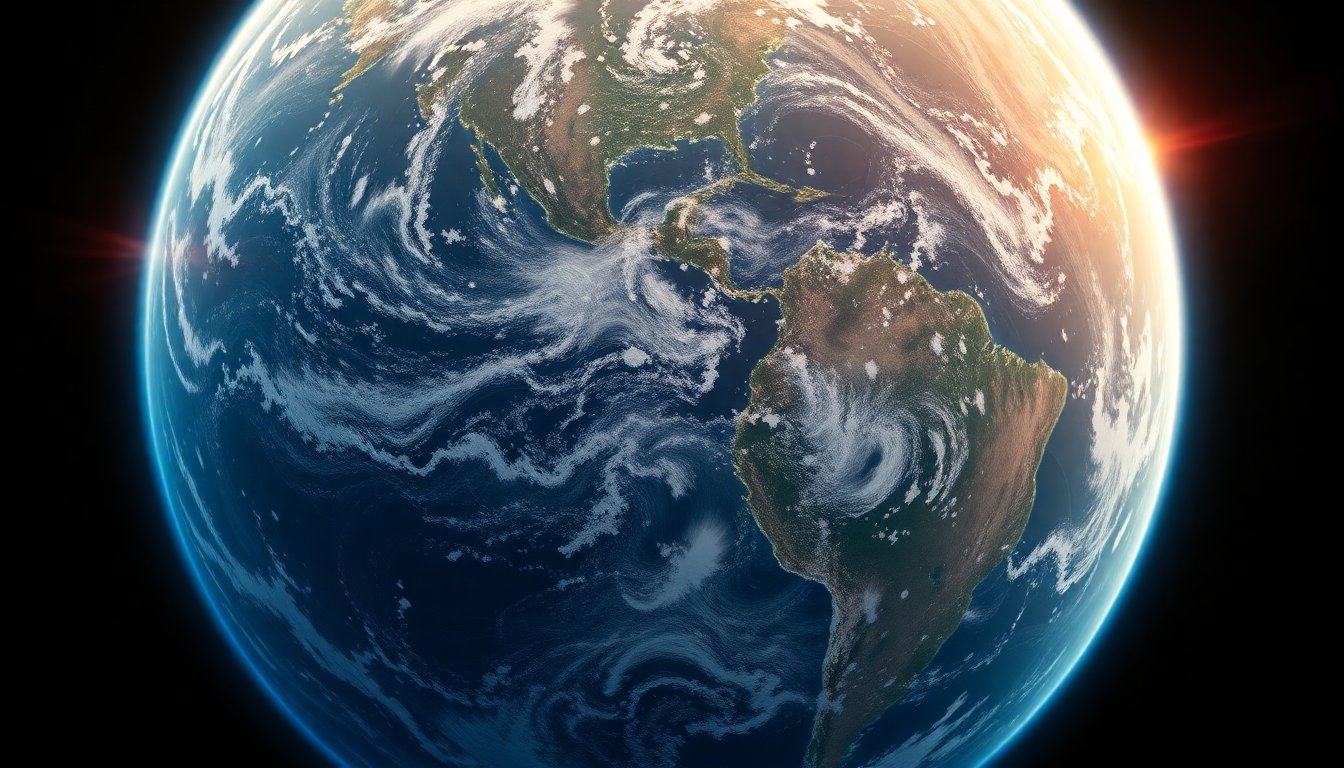
Earth Pulses Every 5000 Years Scientists Discover Now
A study published in Nature Communications revealed that Earth experienced rapid climate fluctuations recurring every 4 to 5 thousand years 83 million years ago, pushing climate to oscillate between wetter and drier periods. The discovery adds a new dimension to understanding climate in warmer eras, as scientists previously knew major orbital changes affecting hundreds of thousands of years, but now shorter cycles between 1 to 6 thousand years have been detected. Researchers examined ancient Chinese rocks to uncover this pattern hidden from geologists for decades, linking these short cycles to direct astronomical influences on our planet. This means even ancient greenhouse worlds without ice were not stable as imagined, but experienced a hidden rhythm reshaping their climate with astonishing regularity.
Source
GeographyArticleyesterday
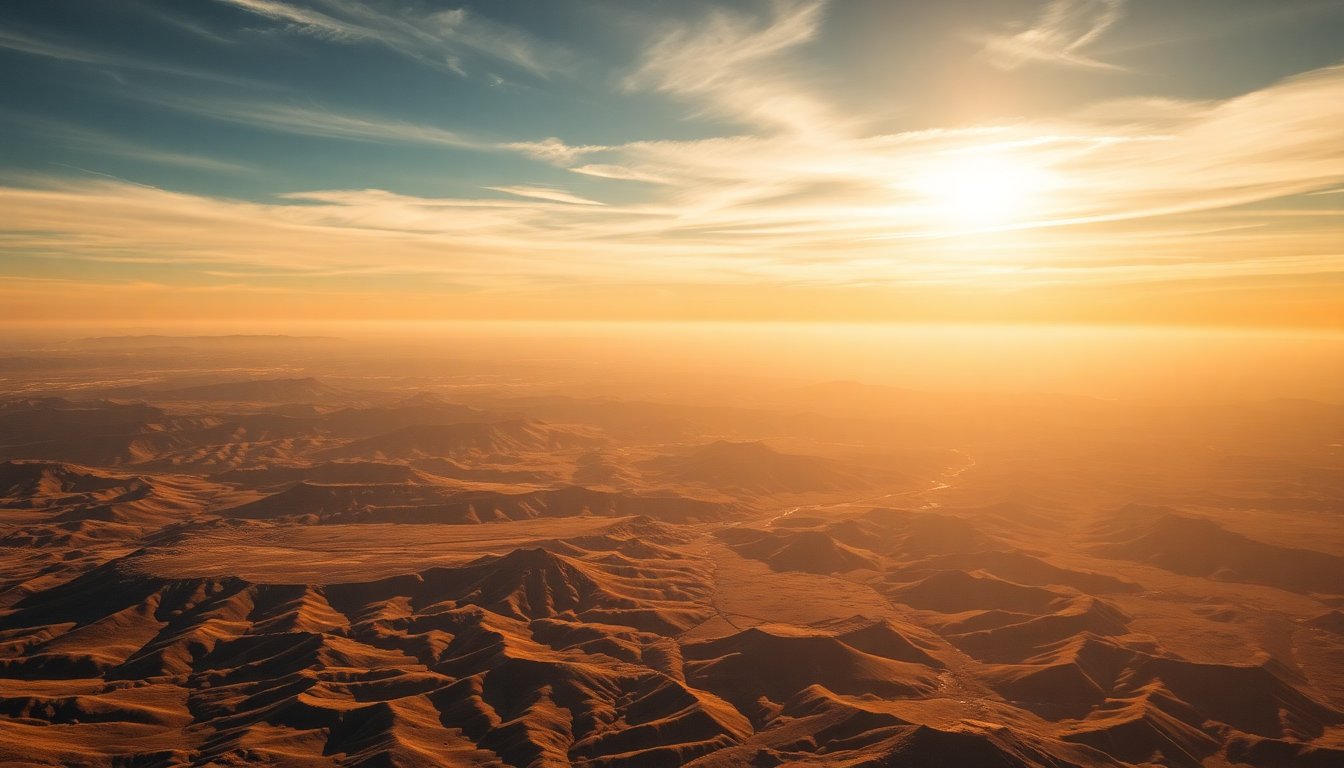
43 degrees in March: Geography of anomalous heat
On March 19, 2026, Arizona's desert recorded 43.3 degrees Celsius, shattering the highest temperature ever documented for March in the United States. The crisis lies beyond the number itself—in timing. The region is accustomed to extreme heat, but not months ahead of schedule. According to World Weather Attribution, "events as warm as March 2026 would have been virtually impossible without human-induced climate change." Burning fossil fuels alone added between 2.6 and 4 degrees Celsius. The tragedy unfolds in a fundamental disconnect: disaster systems were built on historical patterns, assuming heat arrives on schedule. Nature no longer keeps its calendar.
GeographyGeographic Data2 days ago
Unemployment Rates in Arab Countries: Comparative Geographic Distribution 2025

This geographic distribution reflects sharp disparities in unemployment rates across Arab countries, with Gulf states enjoying the lowest global rates thanks to economic reform programs, while other nations face major challenges due to conflicts and economic instability. Updated 2025 data shows the varying performance between Arab geographic regions.

🗺️
Comparative unemployment rates across Arab countriesUnemployment rate as percentage of workforce
🇶🇦Qatar0.1%

Lowest Arab unemployment rate due to economic reforms and sector diversification

🇦🇪United Arab Emirates2.1%

Strong economic growth of 4.8% in 2025

🇰🇼Kuwait2.1%

Economic stability and recovery from contraction

🇸🇦Saudi Arabia3.2%

Economic growth of 3.8% with ongoing diversification

🇴🇲Oman3.2%

Growth of 3.1% driven by renewable energy investments

🇪🇬Egypt6.2%

Gradual decline from 6.4% in Q3 2025

🇧🇭Bahrain6.3%

Economic growth of 3.5% with labor market stability

🇲🇦Morocco13.1%

Expected growth of 3.9% but elevated unemployment

Show all (12) →
💡The gap between Gulf states and other nations reflects the impact of political stability, economic diversification, and structural reforms on employment opportunities and sustainable growth.
Source
GeographyFact Check2 days ago
Do Rainforests Effectively Absorb Carbon Dioxide?

Rainforests are considered one of the most important ecosystems in mitigating climate change effects. However, there are several common claims about their role. This report examines the accuracy of circulating information about rainforests' carbon absorption capacities and the impact of climate change on them.

Amazon rainforest alone provides 20% of the world's oxygen

✓ True

Scientific studies confirm that the Amazon rainforest alone is responsible for producing about 20% of the world's oxygen. Trees absorb carbon dioxide and release oxygen through photosynthesis, making them vital to the global ecosystem.

Sources:موسوعة الخليجناسا بالعربي

Tropical forests absorb about 14 billion metric tons of carbon dioxide annually

✓ True

A NASA study indicated that tropical forests absorb 14 billion metric tons of carbon dioxide from the global total of 25 billion tons, absorbing more than northern forests. This clarifies the crucial role of tropical forests in climate regulation.

Sources:ناسا بالعربي

All rainforests currently absorb more carbon than they emit

✗ False

This claim is entirely inaccurate. Recent studies show that Australian rainforests are now releasing more carbon than they absorb due to climate change and increased tree mortality. The Amazon rainforest is also approaching a "tipping point" where it may shift from a carbon sink to a carbon source.

Sources:الجزيرة نتبي بي سي عربي
Show all (8) →
Source
GeographyBy Numbers2 days ago
Climate Crisis in Numbers — 2024 Hottest Year on Record

2024 registered unprecedented records in global temperature rise and carbon emissions. The World Meteorological Organization warns of exceeding 1.5°C warming threshold, posing existential threats to ecosystems and global economies.

🌡️
1.55 درجة مئوية
Earth temperature rise above pre-industrial levels
2024 recorded highest temperature in 175 years of documented records
💨
40.8 مليار طن
Global annual carbon emissions
CO2 equivalent in 2024 — all-time record
☁️
420 جزء في المليون
CO2 concentration in atmosphere
Increased from 377.1 ppm in 2004 — 11.4% rise in 20 years
🏭
12.53 مليار طن
China's annual carbon emissions
Represents 31% of total global emissions — world's top polluter
Show all (10) →
Source
GeographyRanking2 days ago
Top 10 Largest Countries in the World by Area

Countries are ranked by their total geographic area including land and internal water bodies. Russia leads the list with vast territory spanning Europe and Asia, followed by Canada and the United States. Geographic area is a key indicator for understanding country size and natural resources.

Area in square kilometers
1🇷🇺
RussiaLargest country spanning Europe and Asia
17098242km²
2🇨🇦
CanadaSecond largest country in North America
9984670km²
3🇺🇸
United StatesThird largest country globally
9857348km²
4🇨🇳
ChinaFourth largest with diverse geography
9596961km²
5🇧🇷
BrazilLargest in South America
8514877km²
6🇦🇺
AustraliaSixth largest country
7692024km²
Show all (10) →
Source
GeographyComparison — Scored Comparison3 days ago
Dubai vs Singapore: A Geographic Comparison of Global Coastal Cities

Dubai and Singapore represent two contrasting models of coastal urban development. Dubai is a desert city on the Arabian Gulf with an arid hot climate, while Singapore is a tropical humid island in Southeast Asia. Despite fundamental geographic and climatic differences, both cities achieved exceptional economic development and became global financial centers.

🏜️Dubai
vs
Singapore🌴
Population Density (ratio)
35
95

Singapore is about 6 times more densely populated

Extreme Temperatures
85
45

Dubai exceeds 50°C in summer; Singapore has stable climate

Green Coverage & Parks
25
85

Singapore covers 50% in greenery, known as Garden City

Rainfall Amount
10
88

Singapore receives 15 times more rainfall than Dubai

Show all (8) →
Source
GeographyArticle3 days ago
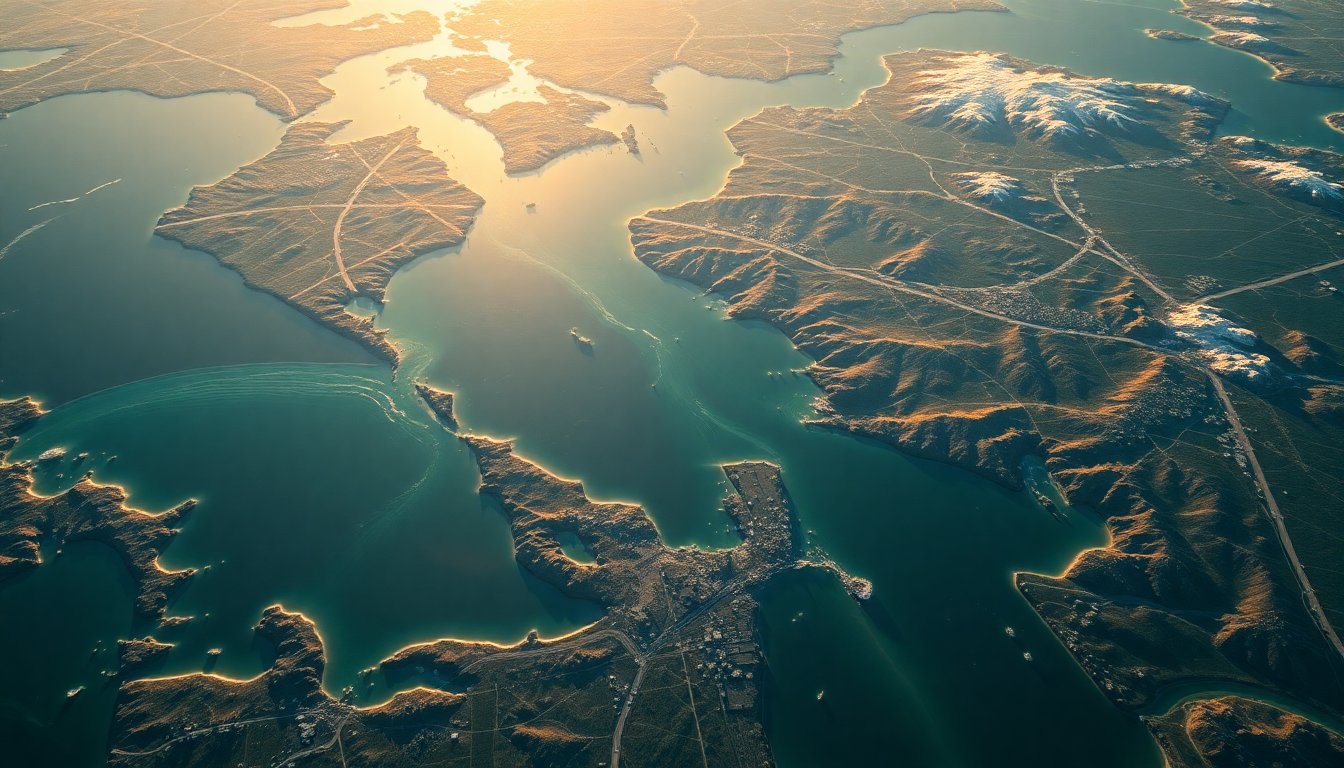
Strategic Waterways: Geographic Control Over Global Trade Destiny
Waterways control approximately 90% of global maritime trade, according to the World Trade Organization (WTO). The Strait of Malacca is the most strategically important waterway, with over 30% of global maritime trade passing through it daily, directly affecting economic and political stability of nations. Coastal states control these vital passages, granting them significant geopolitical influence. Increasing competition among major powers to control these areas reflects the critical importance of geographic location in shaping international balance of power.
Source
GeographyRanking3 days ago
12 Largest Countries in the World by Area

The largest countries control nearly half of the world's land area, with Russia leading the list at over 17 million square kilometers. These nations span different continents and possess vast natural resources and geographical diversity that impacts billions of people worldwide.

Total Area
1🇷🇺
RussiaSpans Europe and Asia, covers 11 time zones
17.1million km²
2🇨🇦
CanadaLargest in North America, population concentrated near US border
10.0million km²
3🇺🇸
United StatesIncludes Alaska and Hawaii, diverse geography coast-to-coast
9.8million km²
4🇨🇳
ChinaHome to second-largest population, diverse from Himalayas to plains
9.6million km²
5🇧🇷
BrazilLargest in South America, home to vast Amazon rainforest
8.5million km²
6🇦🇺
AustraliaContinent-sized, mostly desert with population on coasts
7.7million km²
Show all (12) →
Source
GeographyFact Check4 days ago
Fact-checking Popular Claims About the Sahara Desert: 8 Common Misconceptions

The Sahara Desert is surrounded by many claims and mixed information about its size, location, and climate. This fact-check examines eight popular claims about the world's largest and hottest desert, which spark debate about its geographical and climatic facts. We review scientific evidence to verify each claim's accuracy.

The Sahara is the largest desert in the world

◑ Partial

The Sahara is the world's largest hot desert with 9.2 million square kilometers, but it is the third-largest desert overall, smaller only than Antarctica and Arctic deserts. The claim is accurate with proper specification of desert type.

Sources:WikipediaBritannicaNational Geographic

The Sahara's area is approximately 9.2 million square kilometers

✓ True

Most scientific sources confirm that the Sahara's area is approximately 9.2 million square kilometers (3.6 million square miles), with an area that gradually changes due to desert expansion and contraction over time.

Sources:WikipediaBritannicaLive Science

The Sahara spans across 10 African countries

✓ True

The Sahara spans 10 African countries: Algeria, Chad, Egypt, Libya, Mali, Mauritania, Morocco, Niger, Sudan, and Tunisia, plus the disputed Western Sahara territory.

Sources:BYJUSBritannicaLive Science
Show all (8) →
Source
GeographyChart4 days ago
World's Largest Deserts: Comparative Analysis of Five Giant Deserts
أكبر صحراء قطبية
أنتاركتيكا
14.2 مليون كم²
أكبر صحراء حارة
الصحراء الكبرى
9.2 مليون كم²
نسبة الصحاري من الأرض
20%
من المساحة الكلية
عدد الدول التي تمتد الصحراء الكبرى عليها
10 دول
في شمال أفريقيا
أنتاركتيكاأكبر صحراء مطلقاً بـ 14.2 مليون كم²الصحراء الكبرىأكبر صحراء حارة وتمتد على 10 دولصحراء تاكليماكانثاني أكبر صحراء متحركة بالعالم

Deserts are among the most significant geographical phenomena, covering approximately one-fifth of Earth's land surface. Antarctica Desert leads with 14.2 million square kilometers, followed by the Sahara Desert with 9.2 million square kilometers in North Africa. The analysis reveals fundamental differences between continental and polar deserts in climate and environmental characteristics. The Sahara alone covers an area equivalent to the entire European continent, reflecting the massive scale of this unique ecosystem.

Source
GeographyComparison — Spectrum4 days ago
Tropical Climate vs Polar Climate

A comprehensive comparison between two extreme climate types on Earth. Tropical climate features high temperatures and heavy rainfall, while polar climate is characterized by extreme cold and relative dryness. These differences fundamentally impact ecosystems and biodiversity in each region.

🌴Tropical Climate
vs
Polar Climate❄️
ATropical ClimateBPolar Climate
Annual Temperature
Extremely ColdExtremely Hot
A
B

Tropical avg 25-30°C, Polar avg -20 to -40°C

Annual Precipitation
Very DryVery Wet
A
B

Tropical 2000-10000mm, Polar 200-400mm

Biodiversity
Very LowVery High
A
B

Tropical contains 50% of Earth's species

Growing Season
Very ShortVery Long
A
B

Tropical year-round, Polar only 2-3 months

Show all (6) →
Source
GeographyArticle4 days ago
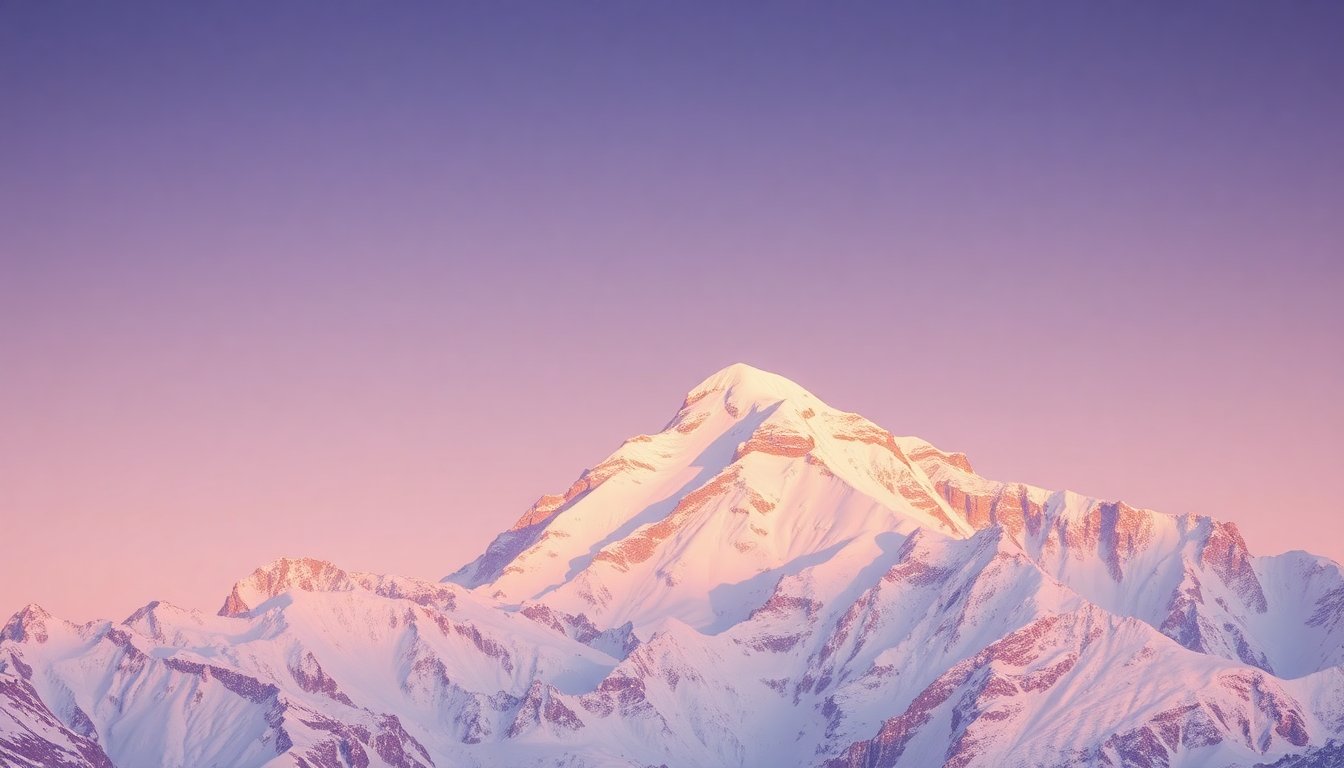
Mount Everest: The World's Highest Peak
Mount Everest stands at 8,849 meters above sea level, making it the highest mountain peak on Earth, according to the Geological Survey of India and the National Geographic Society. Located in the Himalayan range on the Nepal-Tibet border, the mountain experiences extreme climatic conditions with temperatures dropping to -60°C and wind speeds reaching 200 kilometers per hour. The Death Zone refers to altitudes above 8,000 meters, where oxygen levels drop critically, making climbing extremely perilous and potentially fatal without supplemental oxygen and proper acclimatization.
Source
GeographyComparison — Scored Comparison4 days ago
Strait of Hormuz vs Suez Canal — Which is More Critical to Global Economy?

The Strait of Hormuz and Suez Canal represent the lifeblood of global trade and the most strategically important maritime passages, yet they differ fundamentally in cargo types and economic importance. Hormuz specializes in energy transport (oil and liquefied natural gas), while the Suez Canal connects two continents for general cargo, making both indispensable to the global economy but with distinct roles.

🛢️Strait of Hormuz
vs
Suez Canal
Share of Global Trade
65
78

Hormuz represents 20% of global oil trade and 11% of total trade; Suez represents 12% of all global seaborne trade

Average Daily Oil Throughput
92
35

Hormuz: 17-20 million barrels daily of oil and gas; Suez: 3-4 million barrels daily of oil

Trade Diversity
45
88

Hormuz is specialized in energy (oil and gas); Suez transports containers, vehicles, food, electronics, and diverse commodities

Security and Political Stability
38
72

Hormuz: recurring geopolitical tensions between Iran and the West; Suez: relatively more stable with Houthi threats in Red Sea

Show all (8) →
Source
GeographyChart5 days ago
Interactive Waffle Chart: Arab World Literacy Rates by Gender and Age Groups
إجمالي معدل الأمية بالوطن العربي
20.5%
%
الفجوة بين الإناث والذكور
11.3 نقطة مئوية
%
أمية السكان فوق 50 سنة
51%
%
إجمالي الأميين في المنطقة
60+ مليون
شخص
50+ سنةأعلى معدلات أمية في المنطقة15-24 سنةأقل معدلات أمية (جيل التعليم الحديث)الإناث (50+)أعلى معدل للأمية: 57%

Arab region literacy rates stood at 79.5% for population 15+ years in 2021, with significant gender disparities. Male illiteracy stands at 14.6% while female illiteracy reaches 25.9%. Illiteracy rates increase dramatically with age, affecting 51% of those over 50 years, contrasting sharply with minimal rates among younger cohorts. Over 60 million people remain illiterate across the Arab world, though significant variations exist across countries and between urban and rural areas. These statistics underscore persistent challenges, particularly for women and elderly populations.

Source
GeographyChart5 days ago
Nightingale Rose: Monthly Average Rainfall in Istanbul
الإجمالي السنوي
730
ملم
أعلى شهر (ديسمبر)
103
ملم
أدنى شهر (أغسطس)
24
ملم
أيام الهطول
128
يوم/سنة

This polar area chart displays Istanbul's rainfall distribution throughout the year in the iconic 'Nightingale Rose' style. The city exhibits a wet winter pattern with December reaching its peak at approximately 103mm, while August remains the driest at just 24mm. Annual precipitation averages 730mm spread across 128 rainy days. The city's transitional Mediterranean climate is evident through the sharp seasonal contrast, with autumn and winter months receiving nearly triple the summer rainfall.

Source
GeographyChart5 days ago
Egypt Population Pyramid: Age Distribution Comparison Between 2000 and 2025
إجمالي السكان 2025
107.3
مليون
متوسط العمر
24.7
سنة
نسبة الشباب (أقل من 25)
51.2
%
معدل النمو السنوي
1.6
%
0-4أكبر فئة: 14.24 مليون طفل20-24ذروة الشباب: 19.9% من السكان75+كبار السن: 5.9% فقط

Egypt's population pyramid reveals a remarkable demographic transformation over 25 years. The total population grew from approximately 68 million in 2000 to over 107 million in 2025, an increase exceeding 57%. The youth population (under 25) comprises about 51.2% of the total, making Egypt one of the world's youngest nations. The median age rose from 21 years in 2000 to 24.7 years in 2025, reflecting improved life expectancy and gradually declining fertility rates. A notable expansion in the pyramid's base occurred between 2010-2014 when fertility rates spiked to 3.5, before recent declines. The male-to-female ratio remains nearly equal at 1.02:1, with males slightly outnumbering females in younger age groups.

Source
GeographyChart5 days ago
Projected Global Warming by Region by 2050
المتوسط العالمي
2.75
°م
أعلى احترار (منغوليا)
3.76
°م
أقل احترار (نيوزيلندا)
2.02
°م
عدد الدول فوق 4°م بحلول 2100
55+
دولة
منغولياالأعلى عالمياًأفريقيا (المتوسط)احترار أسرع من المعدلنيوزيلنداالأقل احتراراً

Data reveals significant variation in projected warming across global regions by 2050, with polar and Central Asian regions leading with temperatures exceeding 3.5°C above pre-industrial levels. Mongolia tops the list with the highest projected warming of 3.76°C, while New Zealand shows the mildest increase at just 2.02°C. Africa and the Middle East face faster-than-average warming, with projections reaching 2.5-3.0°C. The global average warming under the SSP2-4.5 'middle-of-the-road' scenario is estimated at 2.75°C, representing the closest alignment with current policies.

Source
GeographyChart5 days ago
Gulf Countries Population Comparison 2025
السعوديةأكبر دولة خليجية سكانياًقطرأعلى نسبة وافدين 85%الإماراتثاني أكبر اقتصاد خليجي

Saudi Arabia leads the Gulf countries with a population exceeding 36 million, followed by the UAE with over 10 million. All Gulf states show significant population growth driven by expatriate workers and economic development. Kuwait and Oman have similar populations of around 4-5 million, while Bahrain is the smallest with approximately 1.5 million. Notably, expatriates constitute over 80% of the population in both the UAE and Qatar.

Source