Knowledge is your true value

Politics

30 posts

Latest articles and analyses in the Politics section on Jamhara

PoliticsNetwork Map21 hours ago
Crown Prince Mohammed bin Salman's Geopolitical Relations Network

Crown Prince Mohammed bin Salman plays a pivotal role in shaping regional and international politics. His network reflects complex strategic alliances between traditional allies and new partners, while pursuing greater strategic independence for the Kingdom and diversifying partnerships beyond traditional American frameworks.

👑

Crown Prince Mohammed bin Salman

Saudi Crown Prince & Prime Minister

10 connections
👨‍👦
King Salman bin AbdulazizCustodian of Two Holy Mosques - Father

Mohammed bin Salman operates under his father's guidance in major governmental matters and strategic decisions

Family & Hierarchical Oversight
🤝
Sheikh Mohammed bin Zayed Al NahyanPresident of UAE

United by shared Gulf interests and close military cooperation, with regular consultations on regional developments and Iranian threats

Strategic Gulf Ally
🌍
President Abdel Fattah El-SisiPresident of Egypt

Historic relations with deep fraternal bonds, collaborating on security threats and regional stability

Arab Strategic Partner
🗽
United States of AmericaTraditional Strategic International Ally

Historic alliance but with questions about Saudi diversification of defense partnerships and US concerns over alternatives

Security & Economic Partnership
🛡️
PakistanNuclear Defense Partner

Mohammed bin Salman signed a historic strategic defense agreement with Pakistan in September 2025, diversifying Saudi defense alliances

Mutual Strategic Defense Agreement
Show all (10) →
Source
PoliticsProfile — Person22 hours ago
Profile: Robert Mueller
Person
⚖️

Robert Mueller

Former FBI Director and Special Counsel in Trump-Russia Investigation

🎂Birth and Death:August 7, 1944 – March 20, 2026🌍Nationality:American💼Key Positions:FBI Director, Special Counsel📍Birthplace:New York City, United States🎖️Military Service:U.S. Marine Corps Officer, Vietnam War
📅
12سنة / years
Years as FBI Director
🏆
1منصب / position
Second-Longest Serving Director
4أوسمة / medals
Military Medals
🔍
2سنة / years
Years as Special Counsel

Robert Swan Mueller III, the sixth Director of the Federal Bureau of Investigation, was a prominent legal figure who devoted his life to public service across decades in the military, federal prosecution, and government institutions. He took the helm of the FBI just one week before the September 11, 2001 attacks, transforming the agency into a counterterrorism powerhouse. He later led the special investigation into alleged Russian interference in the 2016 presidential election, becoming a central figure in one of the most divisive inquiries in modern American history. He died on March 20, 2026, at the age of 81, leaving behind a legacy marked by both respect and controversy.

Timeline

1944

Robert Swan Mueller III born in New York City

1966

Graduated from Princeton University with Bachelor's degree in Politics

1968

Joined U.S. Marine Corps and served in Vietnam War

1973

Earned Juris Doctor from University of Virginia School of Law

Show all (12) →
Source
PoliticsArticle23 hours ago
3 Weeks of War on Iran, Oil Crosses $100
On February 28, 2026, the United States and Israel launched joint airstrikes on Iran targeting sites in Tehran and other cities. Tehran responded by launching dozens of ballistic missiles at Israel and Gulf states including Saudi Arabia, the UAE, Kuwait, Bahrain, Qatar, and Oman, as well as Jordan and Syria. After 3 weeks of confrontations, oil prices jumped to exceed $100 per barrel, while the battle entered a phase of seizing initiative according to military experts. The operation came after a bloody crackdown on Iranian protests in January 2026 and an unprecedented American military buildup in the region. Washington aims to destroy Iran's missile and nuclear capabilities, while Gulf states face direct consequences unseen in decades. The question now is not about the possibility of escalation, but about the international system's capacity to contain the shockwave.
PoliticsArticleyesterday
Iran turns blockade into selective passage system
After weeks of complete closure, Iran has toned down rhetoric to say the strait is only closed to Tehran's enemies. Countries like China, India, and Pakistan have begun receiving Iranian approval for vessel transits, while traffic plummeted to 21 tankers since February 28 compared to over 100 daily before the conflict. The IRGC is developing a coordinated vetting and registration system, according to recent reports. Companies paid around two million dollars for guaranteed safe passage. Tehran isn't blockading the strait—it's managing it. Yet this passage carrying 20% of global oil may never function the same way again.
PoliticsArticleyesterday
Iran fired 66 missile waves in three weeks
Within three weeks of March 2026, Iran launched 66 successive missile waves toward Israel after the United States and Israel struck Iran on February 28. Iran's first response came on March 2 with strikes on Gulf states, then escalated to sophisticated ballistic missiles that breached Israeli defenses. On March 1, Iran formally announced Supreme Leader Ali Khamenei's death and established a temporary leadership council. Notably, Iranian missile operations declined in intensity from March 4 onward, according to analysts who attribute this to depleted stockpiles rather than military victory. Meanwhile, Tehran refuses negotiations, while the US administration rejects any diplomatic mediation efforts throughout March.
PoliticsArticleyesterday
Bahrain Joins International Efforts to Secure Strait of Hormuz
Bahrain announced it will contribute to international efforts to secure maritime navigation through the Strait of Hormuz alongside 19 other countries. This development represents part of a growing international response to ensure safe passage through this strategically vital waterway. NATO Secretary General Mark Rutte stated that member states are conducting discussions on the "best way" to reopen the Strait of Hormuz. The Gulf and international engagement reflects coordinated efforts to maintain regional stability amid escalating geopolitical tensions in the Middle East.
PoliticsArticleyesterday
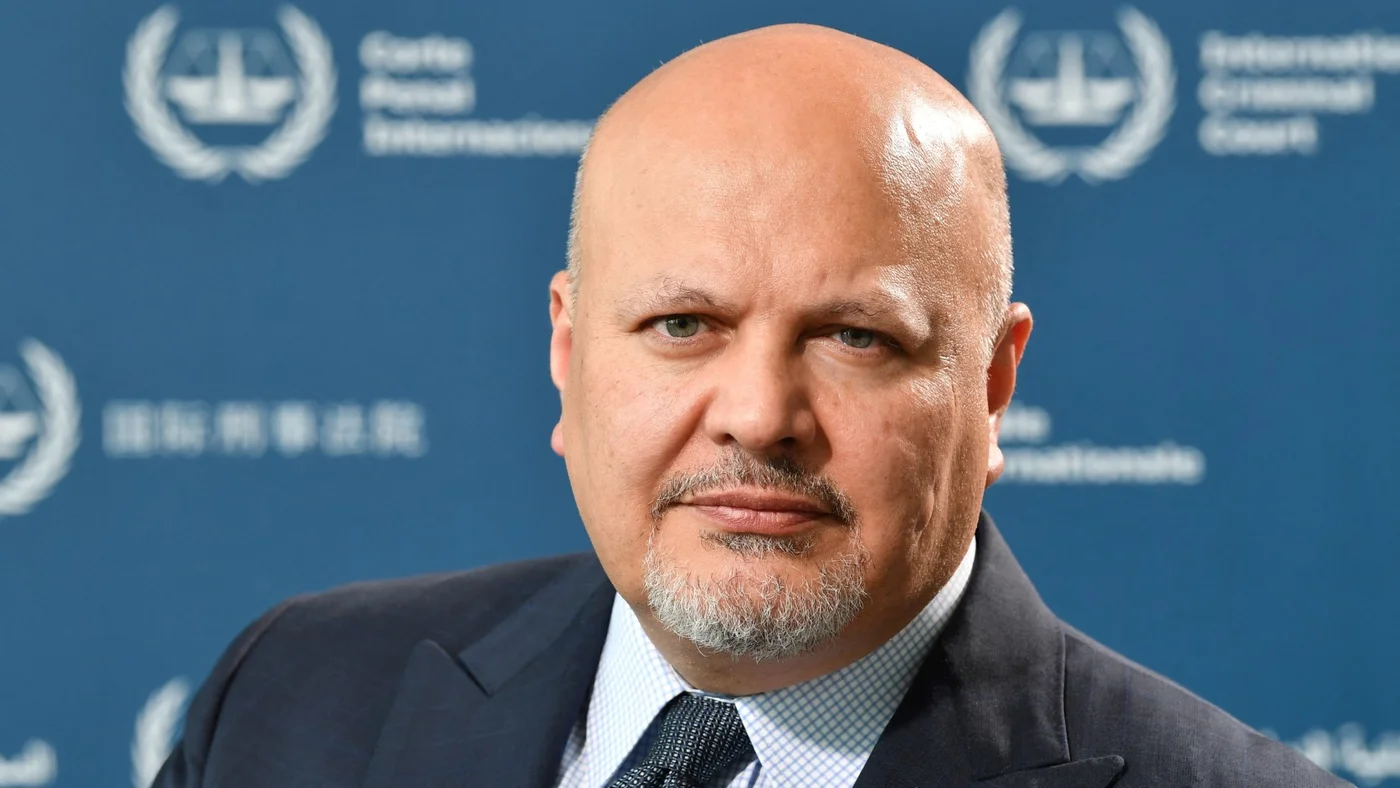
ICC Prosecutor Karim Khan Fully Cleared of Sexual Misconduct Allegations
The International Criminal Court's chief prosecutor Karim Khan has been cleared of all wrongdoing by a judicial panel reviewing a UN investigation into sexual misconduct allegations. The confidential report from three judges was submitted to the ICC's governing body on March 9. The judges followed the "beyond reasonable doubt" standard, the highest proof standard in criminal law. Over three months, the panel examined a 150-page OIOS report alongside over 5,000 pages of underlying evidence. Khan had been on leave since May 2025 pending investigation results, and the judicial conclusion fully vindicated him.
Source
PoliticsNetwork Map2 days ago
Iran's Regional Arms: Network of Influence and Militias

Iran maintains a complex network of regional arms, militias, and armed organizations supervised by the Revolutionary Guard through the Quds Force. Tehran relies on these proxies to advance its geopolitical and military influence across the Middle East.

🇮🇷

Iran & Revolutionary Guard

Parent State & Strategic Director

10 connections
🎖️
HezbollahPrimary military arm in Lebanon

Founded by Iran in 1982 to serve as its foremost military proxy in the Middle East.

Primary Strategic Proxy
⚔️
Houthis (Ansar Allah)Military force in Yemen

Iran supports Houthis with weapons and training since the 1980s to open a southern front.

Supported Regional Ally
🔴
Iraqi Shiite MilitiasSecurity force in Iraq

Popular Mobilization Forces and Iraqi Hezbollah Brigades receive direct Iranian support.

Allied Military Partners
⚙️
Quds ForceExternal military arm of the Guard

Quds Force leads all Iranian military operations abroad with approximately 15,000 operatives.

Supervisory & Coordinating Body
🌍
Syrian Armed GroupsLoyal armed forces in Syria

Groups like Imam Baqi Brigade backed by Iran to maintain Syrian regime presence.

Military partners in Syrian war
Show all (10) →
Source
PoliticsExplainer2 days ago
Explainer: The US-Israeli War on Iran

Relations between Iran on one side, and the United States and Israel on the other, have escalated sharply since June 2025. The war began with extensive airstrikes and evolved into a complex regional conflict involving multiple actors.

The ongoing war between the US, Israel and Iran represents one of the most dangerous regional crises in recent years, expanding to multiple fronts with interconnected military and political objectives.

🗓️

When did the US-Israeli war against Iran begin?

The war occurred in two phases: the first in June 2025 (the 12-Day War), and the second on February 28, 2026. The first lasted 12 days and ended with a ceasefire, while the second involved extensive US-Israeli airstrikes targeting military and nuclear installations.

⚛️

What are the causes of conflict between the three parties?

The dispute centers on Iran's nuclear program, ballistic missiles, and regional influence. The US and Israel accuse Iran of seeking nuclear weapons, while Iran denies this and asserts its right to peaceful nuclear energy. The escalation also follows Trump's 2018 withdrawal from the nuclear agreement.

🎯

What are the objectives of US and Israeli strikes?

The strikes target destruction of Iranian military and missile capabilities and damage to nuclear facilities. According to official statements, the US and Israel seek to prevent Iran from possessing nuclear weapons and weaken its deterrence capabilities, with Washington hoping to precipitate regime change.

🪧

What role did Iranian protests play in the escalation?

Widespread protests erupted in Iran from late December 2025 against the regime, driven by a severe economic crisis and currency collapse. Trump threatened intervention to protect protesters, and the US exploited this internal weakness as a partial justification for military strikes.

Show all (10) →
Source
PoliticsQuotes2 days ago
Quotes: The US-Israeli War on Iran
The US-Israeli War on Iran

Statements and warnings from political and military leaders about the conflict that erupted between the United States and Israel against Iran from June 2025 to March 2026.

"For decades, Tehran's leaders have openly called for the destruction of Israel. They backed their genocidal rhetoric with a nuclear weapons program. If not stopped, Iran could produce a nuclear weapon in a very short time"

Benjamin Netanyahu· Prime Minister of Israel13 يونيو 2025

"When we're done, take control of the government. It will be yours. And this may be your only chance for generations to come. For years you've asked for America's help, but you didn't get it. Now you have a president who will deliver"

Donald Trump· President of the United States28 فبراير 2026

"Israeli strikes constitute a declaration of war, and what Israel has done is deliberate aggression and a flagrant violation of the UN Charter"

Amir Saeed Iravani· Iranian Ambassador to the United Nations13 يونيو 2025

"The attacks came in self-defense and for the survival of the State of Israel. This escalation came after the failure of diplomatic efforts"

Danny Danon· Israeli Ambassador to the United Nations13 يونيو 2025
Show all (8) →
Source
PoliticsDebate2 days ago
Debate: Civil State vs. Religious State in the Arab Context

The debate between the concepts of civil state and religious state creates deep polarization in Arab political discourse, especially after the 2011 Arab uprisings, as each side holds a different vision regarding the nature of the state and its relationship with religion and law.

Should Arab states be purely civil states separating religion from politics, or states deriving legitimacy from religious values in their legislation?

⚖️Civil State Supporters

Civil states ensure peaceful coexistence among different religious sects and protect minority rights and religious freedoms for all.

Separation of religion and state is necessary for democracy, as civil laws undergo scientific review and development based on evolving societal needs, while religious laws remain fixed.

Modern civil states achieved faster economic and social development with more stable and efficient institutions in managing public affairs.

🕌Religious State Supporters

Islam is a comprehensive system containing laws and regulations for all aspects of political, economic, and social life, and complete separation from the state distorts the essence of religion.

Historical Islamic states achieved great civilizational achievements, and contemporary problems resulted from straying from proper Islamic application, not from Islam itself.

Islamic reference provides stronger moral and value guarantees than purely civil laws that may change based on politicians' interests.

Show full debate →
Source
PoliticsBriefing2 days ago
Briefing: Iran War Ignites Global Energy Markets and Threatens Economic Stability

A U.S.-Israeli war on Iran erupted on February 28, 2026, causing immediate disruption to global energy markets. Attacks on Iranian infrastructure included targeting oil and gas facilities in the Gulf, triggering sharp jumps in oil prices and raising concerns about maritime security through the Strait of Hormuz. Data indicates the conflict has resulted in deep economic repercussions extending to global financial markets and the tourism sector.

📈

Oil prices surged to $110 per barrel following attacks on major energy facilities, particularly Qatar's Ras Laffan field, the world's largest liquefied natural gas facility.

⚠️

17% of Qatar's liquefied natural gas exports were disrupted, raising serious concerns about global energy supply security and fuel availability.

✈️

Several Gulf states closed their airspace, resulting in cancellation of over 4,000 daily flights and losses estimated in billions for the tourism sector.

📊

Global stock markets declined with S&P 500 falling 0.7%, while gold prices surged as investors sought safe-haven assets.

💰

Financial institutions warned oil prices could reach $200 per barrel by year-end if tensions persist, potentially adding 0.8% to global inflation.

Show all (7) →
Source
PoliticsProfile — Movement2 days ago
Profile: Hamas (Islamic Resistance Movement)
Movement
🇵🇸

Hamas

Palestinian Islamic political and resistance movement

🎂Founded:December 9, 1987🌍Headquarters:Gaza Strip and Doha💼Type:Political, military and charitable movement📍Active in:Palestine and abroad
🏆
76مقعد من 132 (عام 2006)
Legislative Elections Victory
⚔️
كتائب عز الدين القسامأسست عام 1992
Military Wing
👥
مجلس قيادي5 أعضاء
Current Leadership
🕌
الإخوان المسلمونفي فلسطين
Ideological Roots

Hamas (Islamic Resistance Movement) is one of the most prominent Palestinian factions, founded in December 1987 in response to the popular uprising. The movement combines political, social, and military work, achieving a historic victory in the 2006 Palestinian legislative elections. For three decades, Hamas has been a significant political and military force in the Israeli-Palestinian conflict, facing sustained Israeli strikes and targeted killings. The organization currently faces significant leadership challenges following recent targeted assassinations of top leaders.

Timeline

1987

Hamas founded on December 9 in response to First Intifada

1988

Hamas charter released on August 18

1992

Founding of military wing Izz ad-Din al-Qassam Brigades

2006

Hamas wins 76 seats in Palestinian legislative elections

Show all (8) →
Source
PoliticsProfile — Person2 days ago
Profile: Ahmad Al-Sharaa — The Syrian President Who Liberated Damascus
Person
🇸🇾

Ahmad Al-Sharaa, Abu Mohammad Al-Julani

Military leader who toppled Assad and built a new Syria

🎂Born:October 29, 1982🌍Birthplace:Riyadh, Saudi Arabia🏛️Current Position:President of the Syrian Arab Republic📍Origins:Fiq, Golan Heights💼Appointed:January 29, 2025
🏆
100أكثر الشخصيات تأثيراً في العالم لعام 2025 (مجلة تايم)
Global Influence
⚔️
13سنة قيادة مسلحة (2012-2025)
Military Leadership
🌐
15+دول خلال عام واحد من الرئاسة
Official Visits
📈
550% منذ التحرير
Wage Increases

Ahmad Hussein Al-Sharaa, Syria's interim president since January 2025, led the military offensive that toppled Bashar Al-Assad's regime in December 2024 after 61 years of Ba'athist rule and 53 years of Assad family control. Born in Riyadh to a Syrian Golan family, his trajectory marked a dramatic shift from leading armed groups to governing a nation ravaged by a 12-year civil war. Today, Al-Sharaa seeks to rebuild Syria on new foundations, attempting to reconcile his jihadi past with aspirations to modernize a state fractured by decades of conflict.

Timeline

1982

Ahmad Al-Sharaa born in Riyadh to Syrian Golan family

2003

Joined Al-Qaeda in Iraq to fight U.S. forces

2006

Detained by U.S. forces until 2011

2012

Founded Al-Nusra Front with Al-Qaeda backing

Show all (10) →
Source
PoliticsProfile — Person2 days ago
Profile: Mojtaba Khamenei
Person
🇮🇷

Mojtaba Khamenei

Shadow figure who assumed leadership of the Islamic Republic

🎂Date of Birth:September 8, 1969🌍Birthplace:Mashhad, Iran👨‍👤Current Position:Supreme Leader of Iran👨‍👨‍👦Family Relation:Son of former Supreme Leader Ali KhameneiAppointment Date:March 8, 2026
📅
30+سنة
Years of Undeclared Influence
⚔️
1986عمره 17 سنة
Iran-Iraq War Participation
🏢
20+سنة
Running Supreme Leader's Office
🚫
2019وزارة الخزانة
US Sanctions

Mojtaba Hosseini Khamenei, the shadowy figure who emerged from the wings to become Iran's third supreme leader in unprecedented dramatic circumstances. Following his father Ali Khamenei's assassination in US-Israeli airstrikes on February 28, 2026, he was chosen by the Council of Experts to lead the Islamic Republic, transforming a system born from revolution against hereditary monarchy into a dynastic one. A controversial and enigmatic figure, he spent decades wielding real influence without holding formal office, controlling actual power levers through the Revolutionary Guards and security apparatus.

Timeline

1969

Born in Mashhad on September 8

1979

Raised amid revolutionary environment after Islamic Revolution

1986

Joined Iran-Iraq War fronts in Habib Battalion at age 17

2005

Believed to play key role in supporting Mahmoud Ahmadinejad's election

Show all (9) →
Source
PoliticsTimeline2 days ago
Israeli-Iranian Conflict Timeline — 2006 to 2024

A chronological series documenting major developments in the conflict between Iran and Israel, including military operations, attacks, and diplomatic developments. This timeline reflects direct and indirect confrontations and escalations between the two sides over nearly two decades.

2006

⚔️ Second Lebanon War and Iranian-backed Hezbollah strengthening

War breaks out between Israel and Iran-backed Hezbollah in Lebanon, deepening regional conflict and reinforcing Iran's role as a regional power opposing Israel.

Beginning of targeted assassinations of Iranian nuclear physicists, reportedly attributed to Israel in various reports.

2010
2011

💻 Stuxnet virus and Iranian nuclear program

Discovery of advanced computer virus used to sabotage centrifuges at Iranian nuclear facilities, attributed to Israeli and American efforts.

Death of Iranian physicist in assassination attributed to Israel, escalating tensions between the countries.

2012
2015

📜 Iranian Nuclear Deal (JCPOA)

Signing of comprehensive nuclear agreement between Iran and major powers, reducing direct tensions, though Israel maintained strong opposition.

Show all (14) →
Source
PoliticsScenarios2 days ago
Future Trajectories — Three Scenarios for the US-Israeli War Against Iran in the Coming Years

Since US-Israeli attacks on Iran began in February 2026, the trajectory of Middle Eastern conflict remains uncertain. The fundamental question concerns whether the confrontation will evolve into a prolonged war of attrition, expand into a comprehensive regional conflict, or end through political settlement. The coming weeks will determine the conflict's course, with potential implications for global stability.

How will the US-Israeli war against Iran develop? What are the scenarios for the next phase?

🗓 Over the next 2-5 years
🟢Best Case: Early De-escalation and Political Settlement
25%
  • Urgent international intervention from Russia, China, and European powers to contain escalation
  • Return to nuclear negotiations through Omani or Kuwaiti mediation channels
  • US commitment to reducing demands and accepting Iranian concessions on enrichment
  • Prevention of conflict expansion to Iran's allies including Hezbollah, Houthis, and Iraqi militias

A comprehensive agreement is reached involving reduced enrichment levels and international guarantees against regional destabilization, allowing for lifting economic sanctions and returning to relative stability in the Middle East.

🔵Most Likely: Limited War and Intermittent Military Attrition
55%
  • Continuation of limited strikes exchange among parties without expansion to new fronts
  • Iran's reliance primarily on guided ballistic missiles for retaliation without directly threatening Hormuz Strait
  • Restraint by Hezbollah and Houthis with limited selective attacks
  • Gulf states seeking diplomatic solutions to prevent hostilities expansion

The confrontation extends over 2-3 years with heavy military and economic costs on both sides, with each side declaring limited tactical victories, potentially resulting in a phased settlement that freezes the situation without fundamental resolution.

🔴Worst Case: Regional Explosion and Full-Scale War
20%
  • Expansion of Israeli-American attacks to target civilian infrastructure and vital facilities
  • Comprehensive Iranian retaliation including attacks on Hormuz Strait or threatening global shipping
  • Full activation of Iran's allied network including Hezbollah, Houthis, and pro-Iranian elements in Iraq
  • Failure of all international mediation efforts and entry of new regional powers into the conflict

The conflict transforms into a comprehensive regional war affecting multiple Middle Eastern countries, with partial or complete disruption of shipping in Hormuz Strait, sharp rise in global oil prices, global economic crisis, and potential collapse or partition of the Iranian state.

Source
PoliticsArticle2 days ago
Morocco's 2026 Elections: A Crucial Democratic Test
Morocco will hold general elections scheduled between September 16-23, 2026, to elect 395 members of its parliament. This electoral milestone carries exceptional significance in Morocco's political landscape, with political actors prioritizing electoral integrity and transparency. The focus remains on enhancing participation, achieving social justice, and combating electoral corruption. This electoral moment reflects Morocco's commitment to renewing its political leadership and deepening democratic experience during a sensitive regional period.
PoliticsArticle2 days ago
Strategic Resignation Within U.S. Administration Over Iran Policy
Joe Kent, national counterterrorism official, resigned from his position in protest of the Trump administration's Iran strategy. This move reflects growing fractures within senior political circles regarding Iranian policy direction. In the broader geopolitical context, the Middle East is experiencing escalation threatening energy infrastructure. International economic institutions warned of potential global energy shock, particularly as strikes on energy facilities intensify, destabilizing commodity markets and prompting in-depth government investigations into related misconduct and strategic implications.
Source
PoliticsArticle2 days ago
Growing Partisan Pressures Threaten Independence of U.S. Inspectors General
Recent political developments reveal increasing erosion of inspector general independence in the United States. According to media reports from March 2026, these oversight officials face escalating partisan pressures threatening their supervisory role. In this context, Republican Senator Markwayne Mullin advanced successfully through the Senate Homeland Security Committee despite disagreements with chairman Rand Paul. These events reflect mounting tension between institutional independence and partisan pressures within American governmental structures, raising concerns about accountability mechanisms.
Source
PoliticsArticle2 days ago
Loss of Independence: U.S. Government Inspectors General Under Political Pressure
The position of Inspectors General in the U.S. administration faces accelerating erosion in independence. According to media reports from March 2026, these officials, tasked with overseeing government corruption and misconduct, face increasing partisan pressures. These positions are considered vital to administrative accountability, yet current practices indicate their independence is affected by political considerations. This development reflects broader challenges facing oversight mechanisms in government systems, impacting institutions' ability to achieve transparency and integrity in their operations.
Source
PoliticsArticle4 days ago
International Peace Treaties: Their Role in Conflict Resolution
Bilateral treaties play a pivotal role in resolving international disputes peacefully. According to the United Nations, over 540 peace treaties have been documented since 1945, contributing to a 40% reduction in international wars during the past decade. Preventive diplomacy relies on direct negotiations and international mediation to prevent conflict escalation. The success of these treaties depends on political commitment from parties and fostering mutual trust, making diplomatic dialogue an effective tool for sustainable global peace.
Source
PoliticsTimeline4 days ago
History of ISIS from Foundation to Decline and Defeat

A timeline tracing ISIS's path from its foundation in 1999 to its establishment in 2004, through its expansion and territorial control in Iraq and Syria, to its military defeat and the collapse of its self-declared state between 2017 and 2019. The timeline documents the major political and military milestones that shaped the organization's trajectory.

1999

🌱 Founding of Jamaat al-Tawhid wal-Jihad

The organization was founded by Jordanian Abu Musab al-Zarqawi under the name Jamaat al-Tawhid wal-Jihad, marking the first root of what would become ISIS.

Zarqawi announced the group's affiliation with al-Qaeda and rebranded it as al-Qaeda in Iraq (AQI), maintaining its expansionist objectives.

2004
2006

💔 Death of Zarqawi and Formation of ISI

Death of Zarqawi in US airstrike led to the proclamation of the Islamic State of Iraq under Abu Omar al-Baghdadi's leadership.

Sunni tribes and Iraqis turned against the group due to its harsh treatment, resulting in significant decline in its power and influence.

2007
2010

👤 Abu Bakr al-Baghdadi Takes Leadership

Abu Bakr al-Baghdadi assumed leadership after his predecessor's death and began reorganizing the weakened group.

Show all (16) →
Source