
Knowledge is your true value
PoliticsBriefing2 days ago

Briefing: Iran War Ignites Global Energy Markets and Threatens Economic Stability

📈

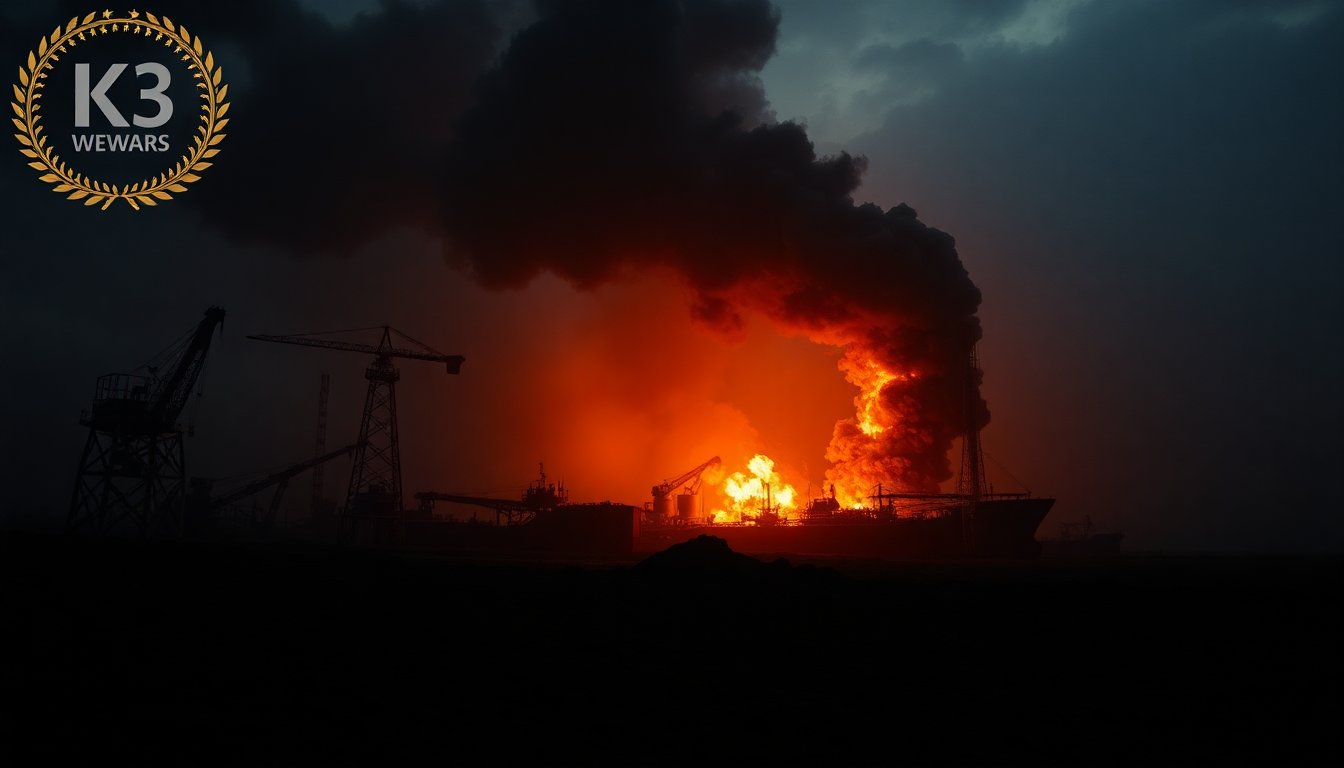
Oil prices surged to $110 per barrel following attacks on major energy facilities, particularly Qatar's Ras Laffan field, the world's largest liquefied natural gas facility.

⚠️

17% of Qatar's liquefied natural gas exports were disrupted, raising serious concerns about global energy supply security and fuel availability.

✈️

Several Gulf states closed their airspace, resulting in cancellation of over 4,000 daily flights and losses estimated in billions for the tourism sector.

📊

Global stock markets declined with S&P 500 falling 0.7%, while gold prices surged as investors sought safe-haven assets.

💰

Financial institutions warned oil prices could reach $200 per barrel by year-end if tensions persist, potentially adding 0.8% to global inflation.

🌊

Shipping traffic through the Strait of Hormuz, through which one-fifth of global oil trade passes, was disrupted, threatening regional and global economic stability.

🛢️

OPEC+ members agreed to increase oil production by 206,000 barrels daily in an attempt to mitigate supply shortages and price pressures.

📉
110
USD per barrel - highest crude oil price in recent days
⬆️
120
USD per barrel - level touched on March 9, first time since July 2022
4000+
Daily flight cancellations due to Gulf airspace closures
20%
Percentage of global oil supply disrupted by Strait of Hormuz closure
"

If energy infrastructure is damaged or destroyed, it will inevitably cause significant delays in rehabilitation, and rebuilding may take months, even years.

Rob ThummelPortfolio Manager at Tortoise Capital
Bottom Line

The 2026 Iran war has redrawn the map of global economic risks, with military escalation impacts extending beyond the region to strike financial markets, tourism, and global energy supplies, requiring urgent diplomatic intervention to prevent deep economic crisis.

A U.S.-Israeli war on Iran erupted on February 28, 2026, causing immediate disruption to global energy markets. Attacks on Iranian infrastructure included targeting oil and gas facilities in the Gulf, triggering sharp jumps in oil prices and raising concerns about maritime security through the Strait of Hormuz. Data indicates the conflict has resulted in deep economic repercussions extending to global financial markets and the tourism sector.
Source
Related Posts
PoliticsNetwork Map23 hours ago
Crown Prince Mohammed bin Salman's Geopolitical Relations Network

Crown Prince Mohammed bin Salman plays a pivotal role in shaping regional and international politics. His network reflects complex strategic alliances between traditional allies and new partners, while pursuing greater strategic independence for the Kingdom and diversifying partnerships beyond traditional American frameworks.

👑

Crown Prince Mohammed bin Salman

Saudi Crown Prince & Prime Minister

10 connections
👨‍👦
King Salman bin AbdulazizCustodian of Two Holy Mosques - Father

Mohammed bin Salman operates under his father's guidance in major governmental matters and strategic decisions

Family & Hierarchical Oversight
🤝
Sheikh Mohammed bin Zayed Al NahyanPresident of UAE

United by shared Gulf interests and close military cooperation, with regular consultations on regional developments and Iranian threats

Strategic Gulf Ally
🌍
President Abdel Fattah El-SisiPresident of Egypt

Historic relations with deep fraternal bonds, collaborating on security threats and regional stability

Arab Strategic Partner
🗽
United States of AmericaTraditional Strategic International Ally

Historic alliance but with questions about Saudi diversification of defense partnerships and US concerns over alternatives

Security & Economic Partnership
🛡️
PakistanNuclear Defense Partner

Mohammed bin Salman signed a historic strategic defense agreement with Pakistan in September 2025, diversifying Saudi defense alliances

Mutual Strategic Defense Agreement
Show all (10) →
Source
PoliticsProfile — Person23 hours ago
Profile: Robert Mueller
Person
⚖️

Robert Mueller

Former FBI Director and Special Counsel in Trump-Russia Investigation

🎂Birth and Death:August 7, 1944 – March 20, 2026🌍Nationality:American💼Key Positions:FBI Director, Special Counsel📍Birthplace:New York City, United States🎖️Military Service:U.S. Marine Corps Officer, Vietnam War
📅
12سنة / years
Years as FBI Director
🏆
1منصب / position
Second-Longest Serving Director
4أوسمة / medals
Military Medals
🔍
2سنة / years
Years as Special Counsel

Robert Swan Mueller III, the sixth Director of the Federal Bureau of Investigation, was a prominent legal figure who devoted his life to public service across decades in the military, federal prosecution, and government institutions. He took the helm of the FBI just one week before the September 11, 2001 attacks, transforming the agency into a counterterrorism powerhouse. He later led the special investigation into alleged Russian interference in the 2016 presidential election, becoming a central figure in one of the most divisive inquiries in modern American history. He died on March 20, 2026, at the age of 81, leaving behind a legacy marked by both respect and controversy.

Timeline

1944

Robert Swan Mueller III born in New York City

1966

Graduated from Princeton University with Bachelor's degree in Politics

1968

Joined U.S. Marine Corps and served in Vietnam War

1973

Earned Juris Doctor from University of Virginia School of Law

Show all (12) →
Source
PoliticsArticleyesterday
3 Weeks of War on Iran, Oil Crosses $100
On February 28, 2026, the United States and Israel launched joint airstrikes on Iran targeting sites in Tehran and other cities. Tehran responded by launching dozens of ballistic missiles at Israel and Gulf states including Saudi Arabia, the UAE, Kuwait, Bahrain, Qatar, and Oman, as well as Jordan and Syria. After 3 weeks of confrontations, oil prices jumped to exceed $100 per barrel, while the battle entered a phase of seizing initiative according to military experts. The operation came after a bloody crackdown on Iranian protests in January 2026 and an unprecedented American military buildup in the region. Washington aims to destroy Iran's missile and nuclear capabilities, while Gulf states face direct consequences unseen in decades. The question now is not about the possibility of escalation, but about the international system's capacity to contain the shockwave.